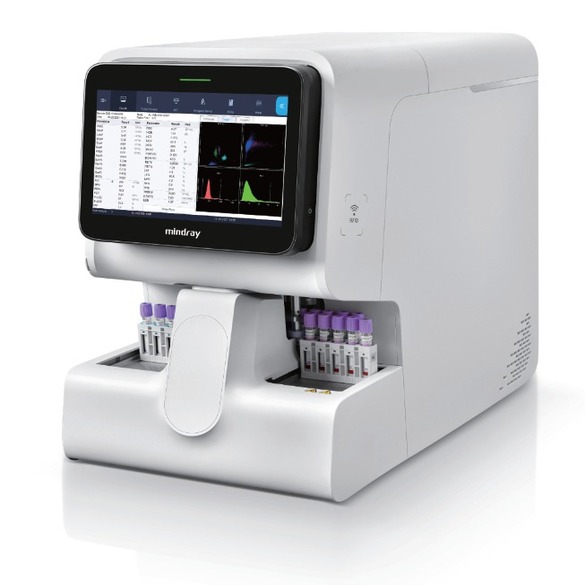
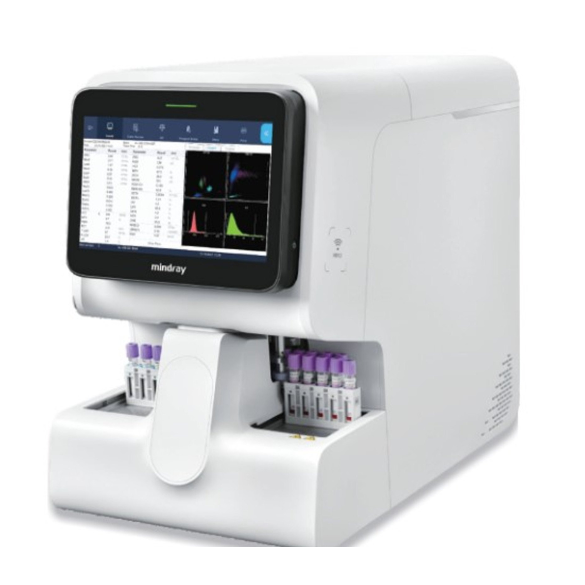
BC 780 - Advanced 05 Part Hematology Analyzer with ESR
Overview
The Mindray BC-780 is a compact, fully automated 5-part hematology analyzer designed to deliver accurate, reliable, and efficient complete blood count (CBC) analysis for small to medium-volume laboratories. Featuring advanced cell analysis technologies, intelligent flagging, and user-friendly operation, the BC-780 provides precise hematological results with fast turnaround time while maintaining a small footprint and low operating cost.
5-Part Leukocyte Differential – Accurate separation and reporting of neutrophils, lymphocytes, monocytes, eosinophils, and basophils
Advanced Optical & Electrical Detection – Combines flow cytometry with impedance measurement for reliable cell analysis
High Throughput Performance – Designed for efficient routine testing with rapid sample processing suitable for busy laboratories
Low Sample Volume Requirement – Requires a small blood volume, making it suitable for pediatric and difficult-to-collect samples
Intelligent Data Management – Built-in quality control, automatic flagging, and LIS connectivity for streamlined laboratory workflow
The Mindray BC-780 operates using a combination of electrical impedance and flow cytometry principles for hematological analysis. Red blood cells and platelets are measured using the impedance method, while white blood cell differentiation is performed through optical flow cytometry, analyzing cell size, internal complexity, and light scattering. Hemoglobin concentration is measured using a colorimetric method, ensuring accurate and reproducible CBC results.
The BC-780 provides a 5-part leukocyte differential, accurately reporting NEU, LYM, MON, EOS, and BASO
It uses electrical impedance for RBC/PLT, flow cytometry for WBC differentiation, and colorimetric measurement for hemoglobin
Yes, its compact design, low sample volume requirement, and efficient throughput make it ideal for small to medium-volume laboratories.
The analyzer includes built-in QC programs, calibration support, and abnormal flagging to ensure consistent and reliable results.
Yes, it supports bidirectional LIS connectivity, enabling seamless data transfer and laboratory workflow integration.